

Backpack & Student Ergonomics
As students head back to school, they’re carrying more than homework—they’re often carrying backpacks that are too heavy, spending hours hunched over laptops, and looking down at phones throughout the day. While these habits may seem harmless, they can contribute to neck pain, back pain, headaches, poor posture, and even decreased athletic performance. Developing healthy postural habits today can help to prevent a lifetime of pain and dysfunction later on in life. Here are some simple ways parents and students can protect their growing bodies throughout the school year.
Is Your Child’s Backpack Too Heavy?
One of the biggest causes of back discomfort in school-aged children is an overloaded backpack. Research suggests that a backpack should weigh no more than 10-15% of a child’s body weight.
For example:
- 60 lb child → backpack should weigh no more than 6-9 lbs
- 100 lb child → backpack should weigh no more than 10-15 lbs
- 150 lb teenager → backpack should weigh no more than 15-22 lbs
When backpacks become too heavy, students often:
- Lean forward while walking
- Round their shoulders
- Develop muscle fatigue
- Experience neck and upper back pain
- Report headaches after school
Choosing the Right Backpack
 Not all backpacks are created equal.
- When shopping for a backpack, look for one with:
- Wide, padded shoulder straps
- A padded back panel
- Multiple compartments to distribute weight evenly
- Adjustable straps
- A waist or chest strap for heavier loads
Students should always wear both shoulder straps. Carrying a backpack over one shoulder causes uneven stress on the spine and muscles.
Laptop and Homework Ergonomics
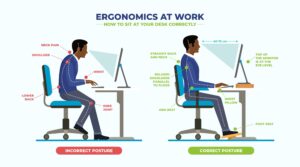 Homework often means hours at a kitchen table or bedroom desk. Proper workstation setup can make a huge difference.
Ideal Homework Posture
- Feet flat on the floor
- Knees bent approximately 90°
- Hips slightly above knees
- Shoulders relaxed
- Elbows around 90°
- Screen at eye level
- Keyboard close enough to avoid reaching
If using a laptop:
Raise the screen using books or a laptop stand and use an external keyboard whenever possible.
The “Tech Neck” Problem
 Students now spend several hours each day looking down at:
- Phones
- Tablets
- Chromebooks
- Gaming devices
Every inch the head moves forward dramatically increases the stress placed on the neck muscles.
Common symptoms include:
- Neck stiffness
- Headaches
- Shoulder tightness
- Mid-back pain
- Fatigue
Encourage students to:
- Hold devices at eye level
- Take frequent breaks
- Stretch every 30-45 minutes
Three Easy Stretches for Students
1. Chin Tucks
Helps improve forward head posture.
- Pull the chin straight backward.
- Hold for 5 seconds.
- Repeat 10 times.
2. Doorway Chest Stretch
Counteracts rounded shoulders.
- Place forearms on each side of a doorway.
- Step forward gently.
- Hold for 30 seconds.
- Repeat 2-3 times.
3. Standing Back Extension
Great after sitting.
- Place hands on hips.
- Gently lean backward.
- Hold 2-3 seconds.
- Repeat 10 times.
Warning Signs Parents Shouldn’t Ignore
If your child frequently complains of:
- Neck pain
- Mid-back pain
- Low back pain
- Headaches after school
- Shoulder pain
- Poor posture
- Difficulty carrying a backpack
…it may be time for a professional evaluation.
Small problems are often easier to correct before they become chronic issues.
How Chiropractic Care Can Help Students
 A chiropractic evaluation can identify movement restrictions, muscle imbalances, and postural issues that may contribute to discomfort. Depending on the student’s needs, care may include:
- Joint and spinal mobility assessment
- Postural evaluation
- Movement screening
- Individualized exercises and stretches
- Ergonomic recommendations for school and home
- Age-appropriate chiropractic treatment when indicated
At Sturges Chiropractic & Sports Medicine, our goal isn’t just pain relief—it’s helping students move better, feel better, and stay active throughout the school year. Contact us today to see how we can help!