

Do you experience tingling or numbness in your hands and fingers? Maybe it feels like sharp pins and needles, or perhaps you experience burning feelings in your hands, wrists, and even forearms. Are your symptoms often worse at night, or do you wake up with numb hands in the morning? If so, you may be suffering from CTS.
What is Carpal Tunnel Syndrome?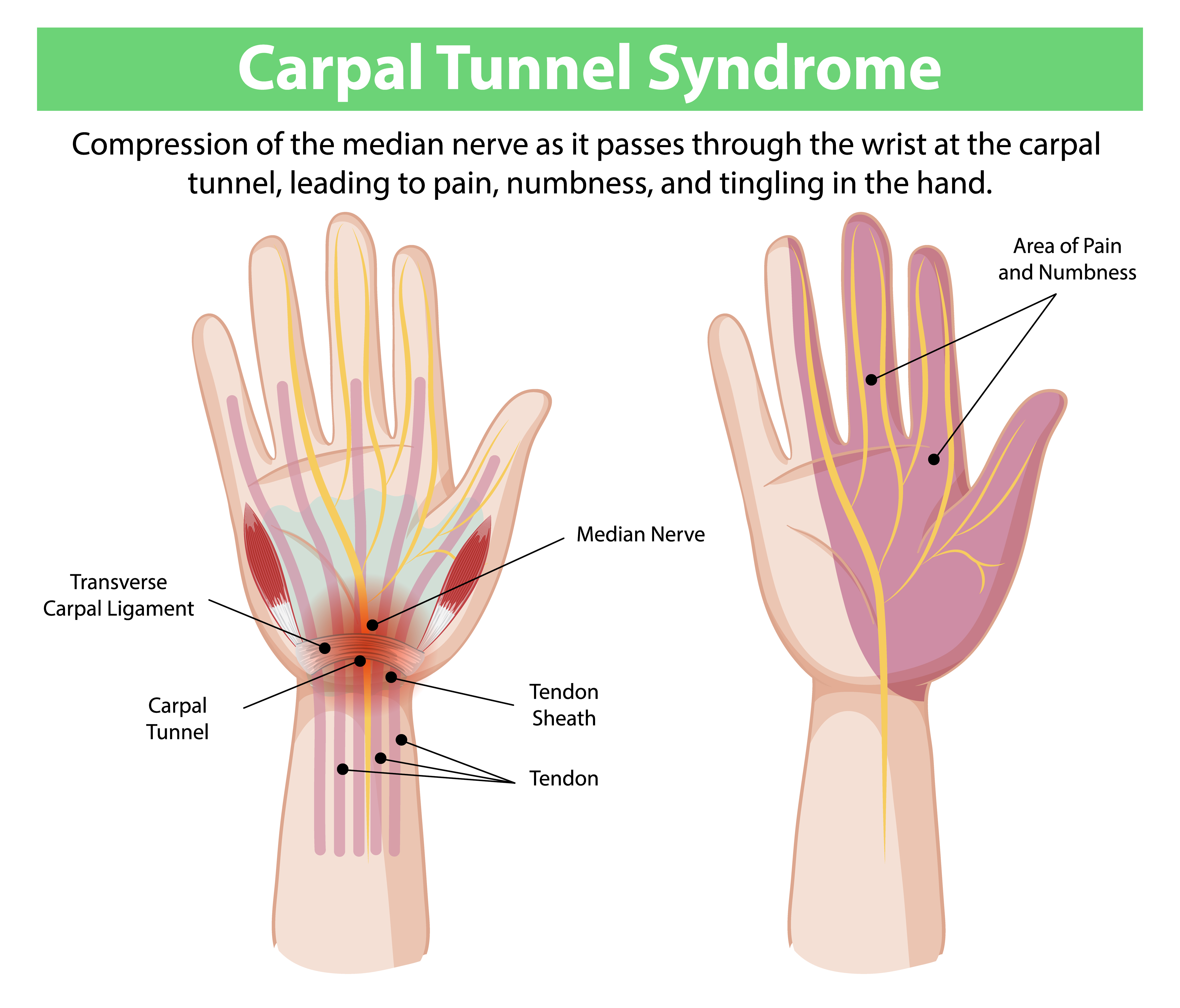
Carpal tunnel syndrome (CTS) is a common condition that affects millions worldwide, often causing numbness, tingling, and pain in the hands and wrists. It occurs when the median nerve, which runs from the forearm into the palm, becomes compressed or irritated as it passes through the carpal tunnel — a narrow passageway in the wrist. Passing through this same passageway are many tendons that supply mobility and strength to the hand allowing for flexion, extension or gripping activities. As these tendons become inflamed due to overuse, they swell, compressing the median nerve.
What Causes Carpal Tunnel Syndrome?
CTS is often linked to repetitive hand movements such as typing, texting, or assembly line work. Other causes include wrist injuries, arthritis, diabetes, and even pregnancy. Symptoms can start gradually and worsen over time, significantly affecting daily activities.
Traditional Treatments vs. Chiropractic Care
Common treatments for CTS include wrist splints, anti-inflammatory medications, steroid injections, and sometimes surgery. While these options can provide relief, they often address only the symptoms rather than the underlying causes.
This is where chiropractic care offers a natural alternative. At Sturges Chiropractic & Sports Medicine, we focus on the musculoskeletal system and nervous system, aiming to restore balance and proper function through non-invasive techniques.
How Can Chiropractic Help with Carpal Tunnel Syndrome?
- Spinal and Wrist Adjustments: Misalignments in the cervical spine (neck) or wrist can put extra pressure on the median nerve. Chiropractors use gentle adjustments to correct these misalignments, relieving nerve compression.
- Graston Technique®: Tight muscles and tendons in the forearm and wrist can contribute to CTS. Treatment with Graston Technique works to relax and release these tight, constricted tissues.
- Posture Correction: Poor posture, especially when working at a desk, can worsen nerve compression. We can provide ergonomic advice and prescribe exercises to improve posture and reduce strain on the wrists.
- Nerve Mobilization Exercises: These help to restore normal nerve movement and reduce symptoms like numbness and tingling.
Benefits of Chiropractic Care for CTS
- Non-invasive and drug-free: No surgery or medications needed.
- Addresses root causes: Treats the underlying dysfunction, not just symptoms.
- Improves overall function: Enhances nerve and joint health.
- Personalized treatment: Tailored to your unique needs and lifestyle.
When to See a Chiropractor for Carpal Tunnel Syndrome
If you experience persistent hand numbness, weakness, or pain, especially if it affects your daily tasks or sleep, it’s time to seek care. Early intervention can prevent symptoms from worsening and reduce the need for more invasive treatments.
Final Thoughts
Carpal tunnel syndrome can be frustrating, but Sturges Chiropractic & Sports Medicine offers a safe, effective, and holistic approach to relief. By focusing on spinal and wrist health, posture, and nerve function, we can help you regain comfort and functionality — naturally.
If you or someone you know is struggling with CTS, consider booking an appointment with us today. Your hands will thank you!